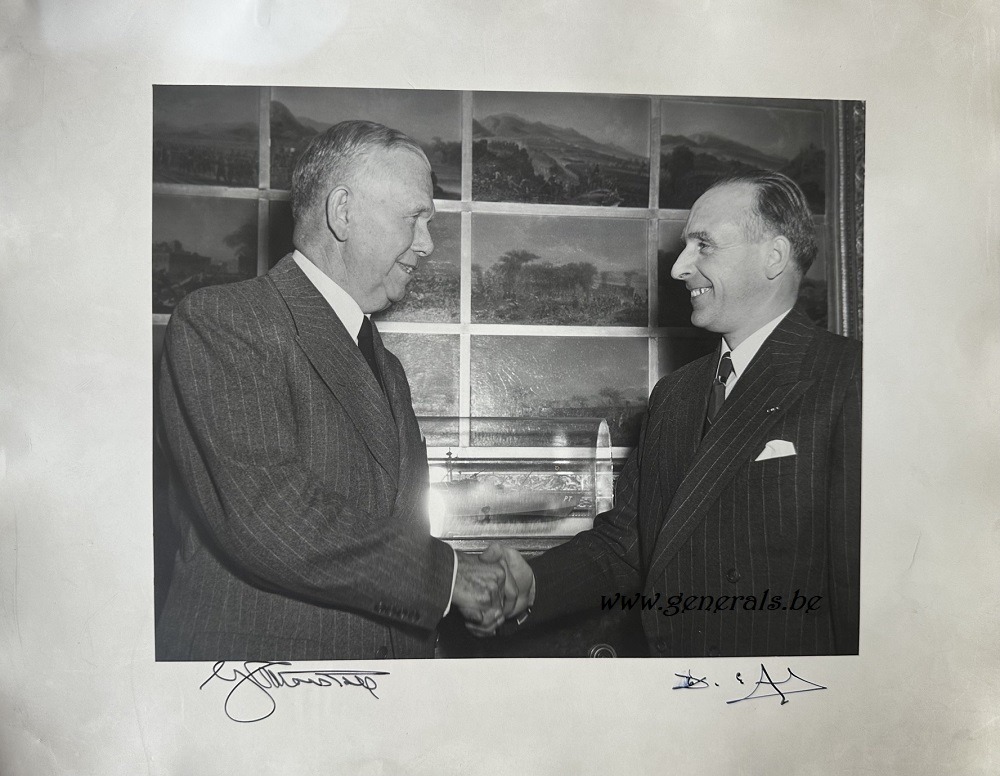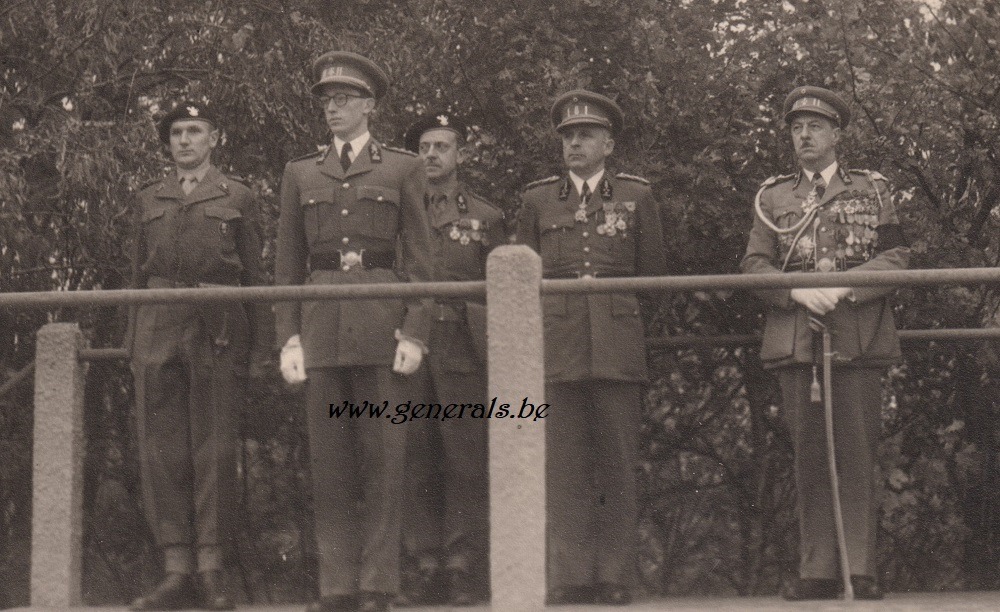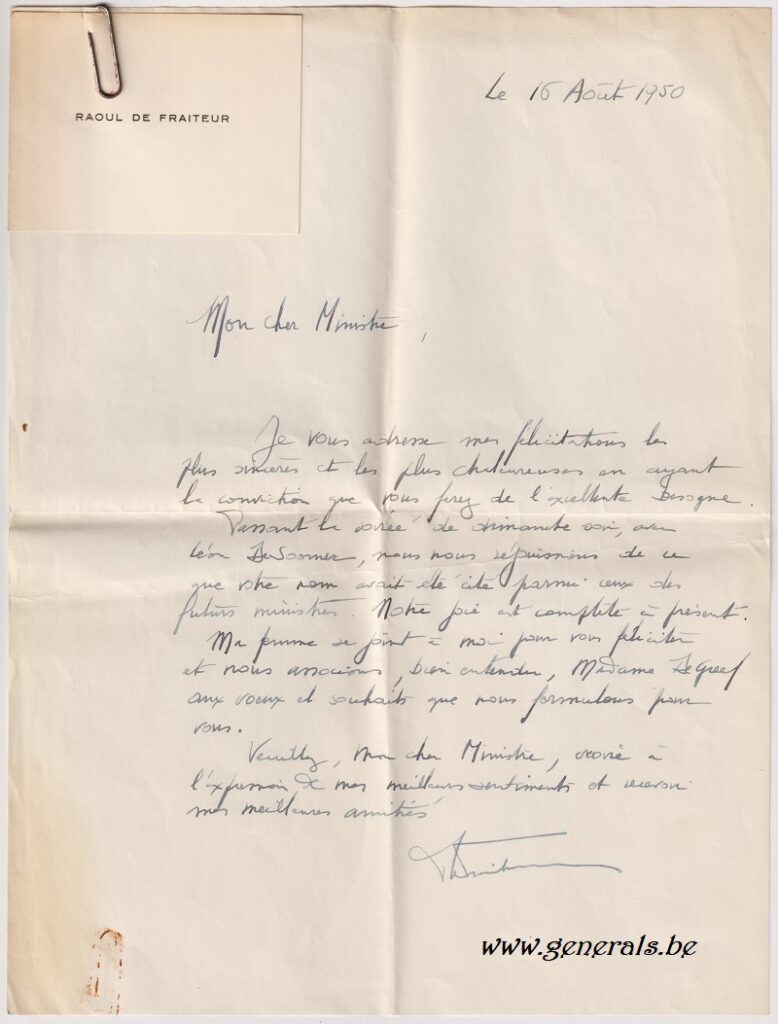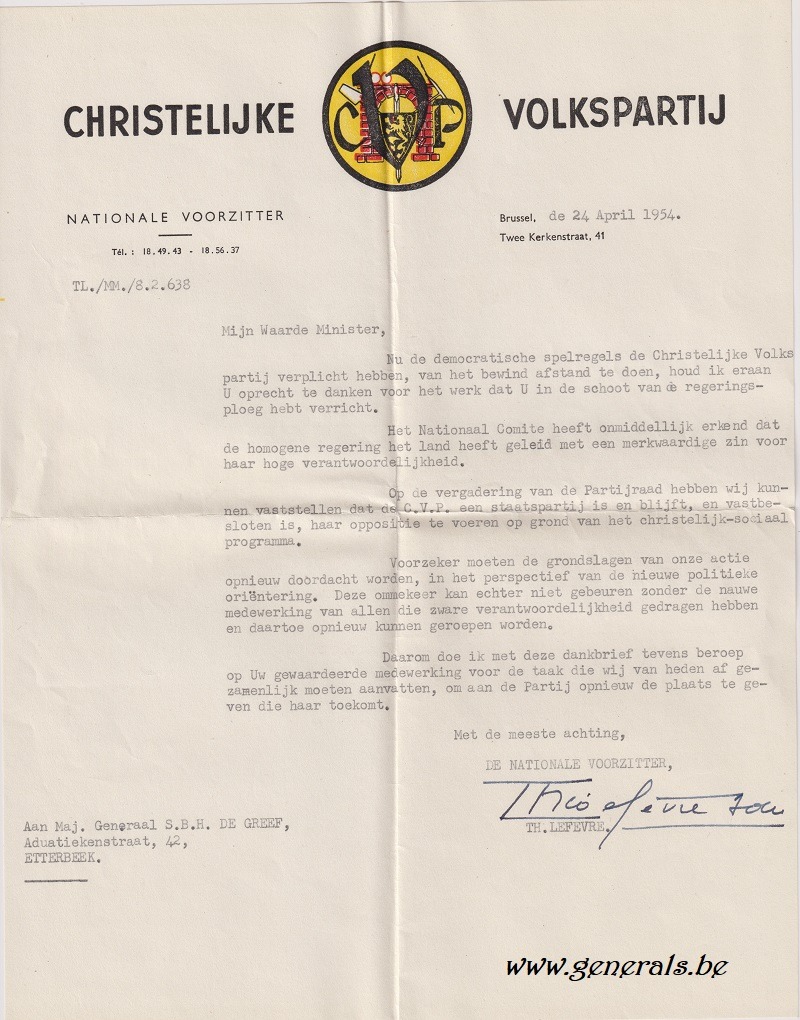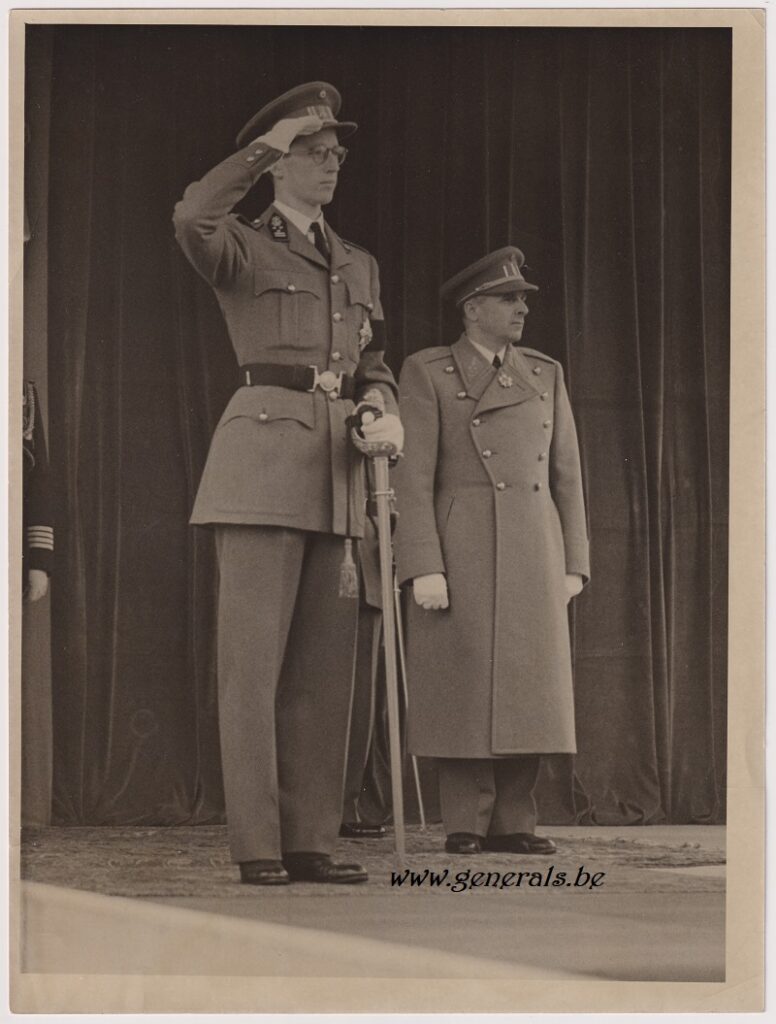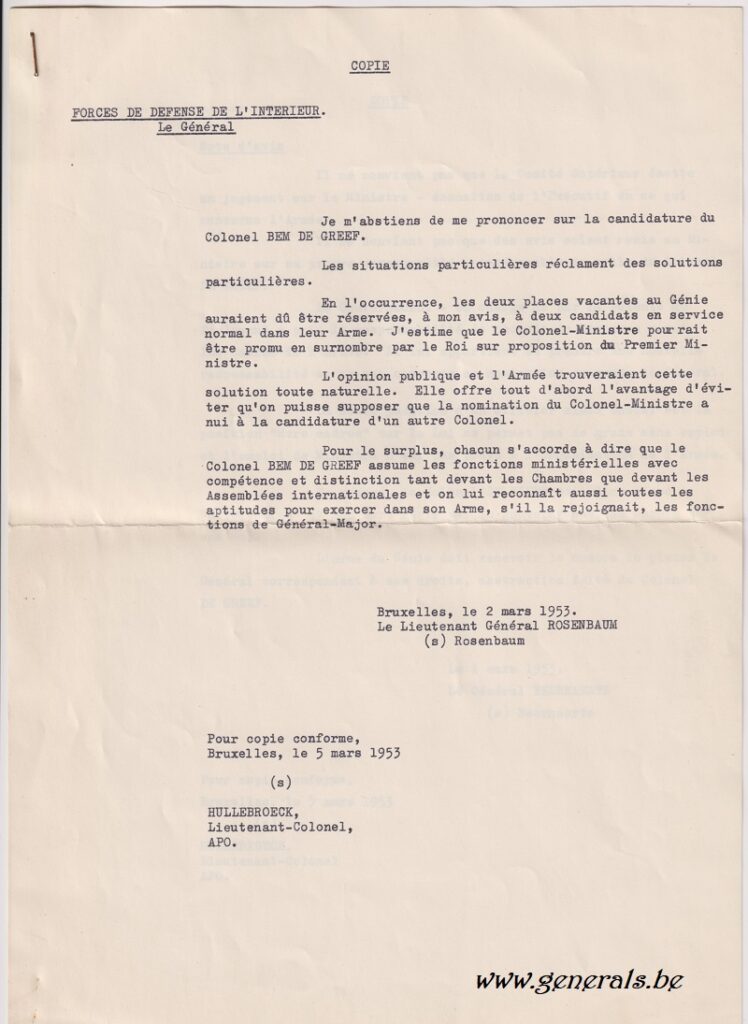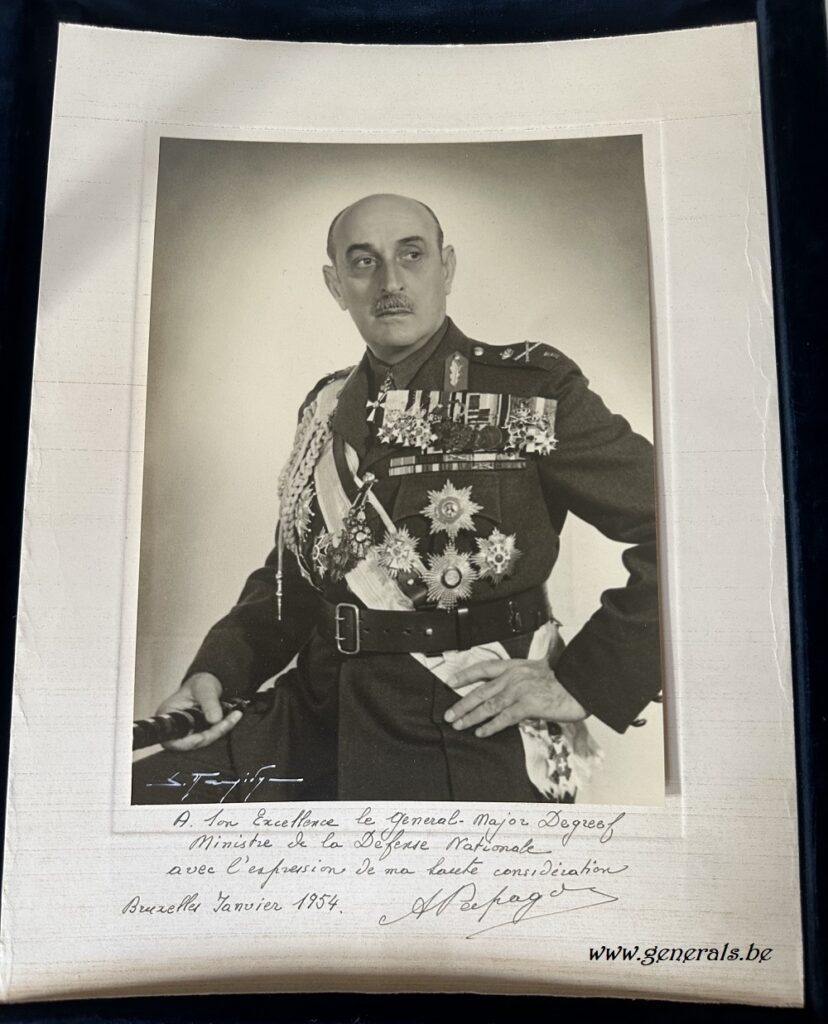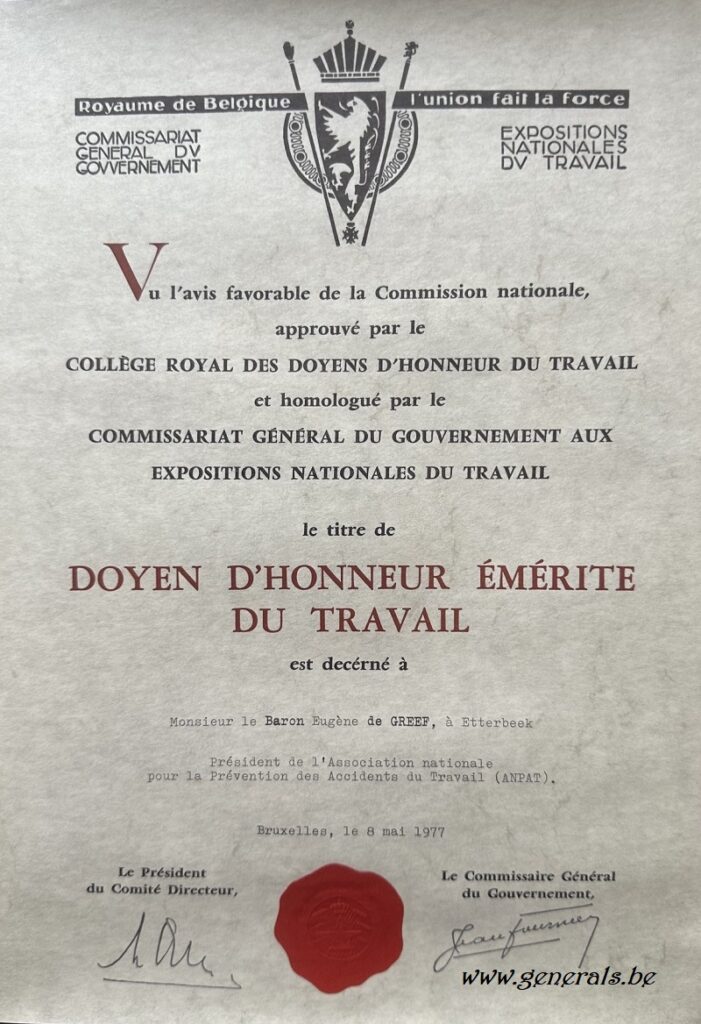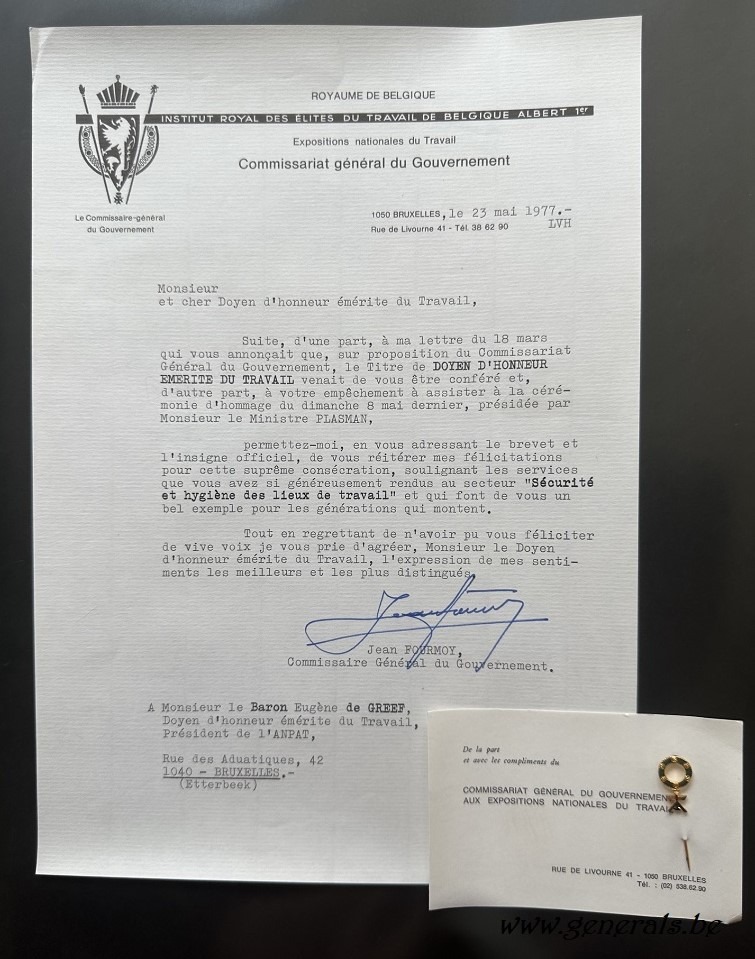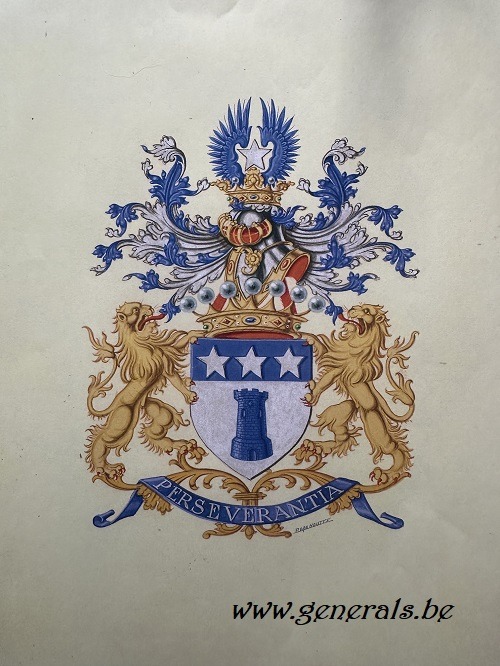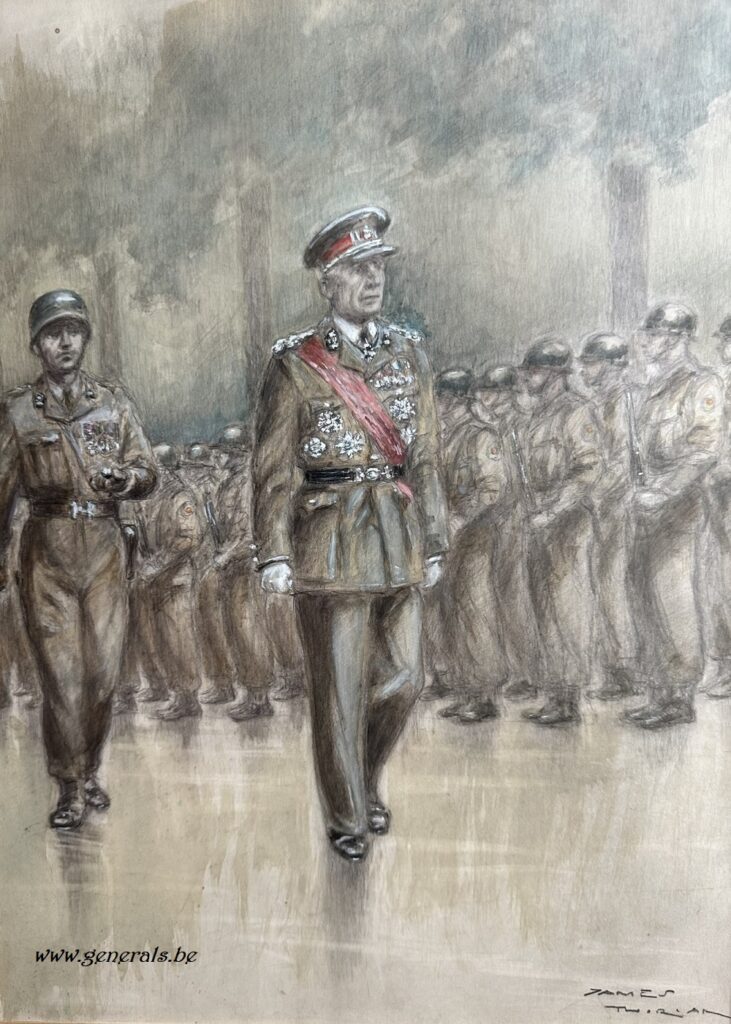
Lieutenant General Baron Eugène de Greef served as Colonel, Minister of Defence during a difficult period. During his tenure (1950–1954), Belgium faced many problems in the wake of the ‘royal crisis’, amongst other issues.
He succeeded Henri Moreau de Melen as Minister of Defence, who had enlisted in the volunteer corps for Korea, disillusioned by the outcome of the royal succession crisis and by politics in general.
As Minister of Defence, he faced all manner of challenges relating to the global economy, the possible extension of compulsory military service, repression and problems in the education system. And, of course, not to be forgotten, the Korean War of 1950–1953.
His eldest son, Guy, volunteered to serve in Korea.
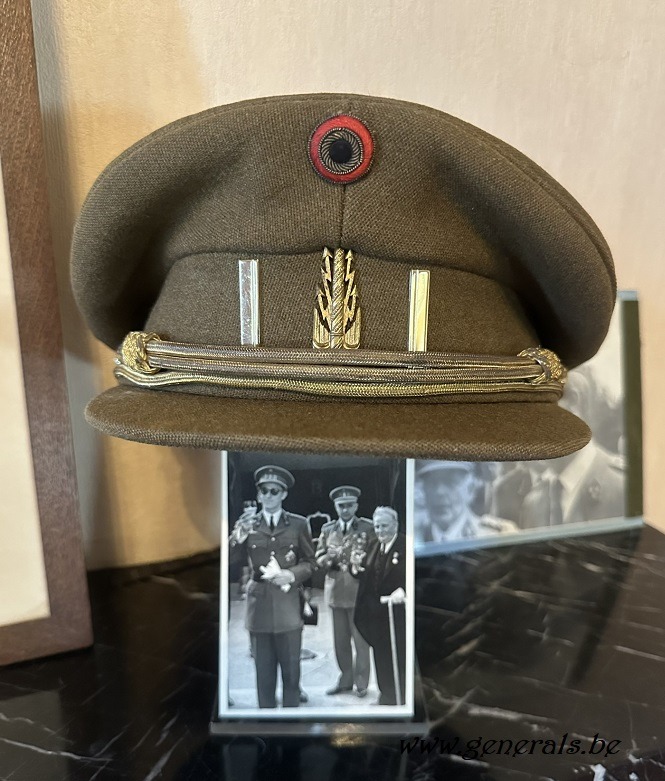
Commander of the War College, 1960–1961.
Inspector-General of the Engineers and Signals Corps, 1954–1960.
Minister of Defence, 1950–1954.
Commander of the War College, 1949–1950.
Director of Military Works for the First Military District, 1949.
Deputy Chief of Staff to the Minister of Defence, 1948–1949.
Attached to the Cabinet of the Minister of Defence, 1944–1948.
Recognised member of the Resistance, National Royal Movement, 1942–1944.
Commander of the 4th Signal Battalion, 1939–1940.
Professor of Engineering and Fortifications at the War College, 1939–1947.
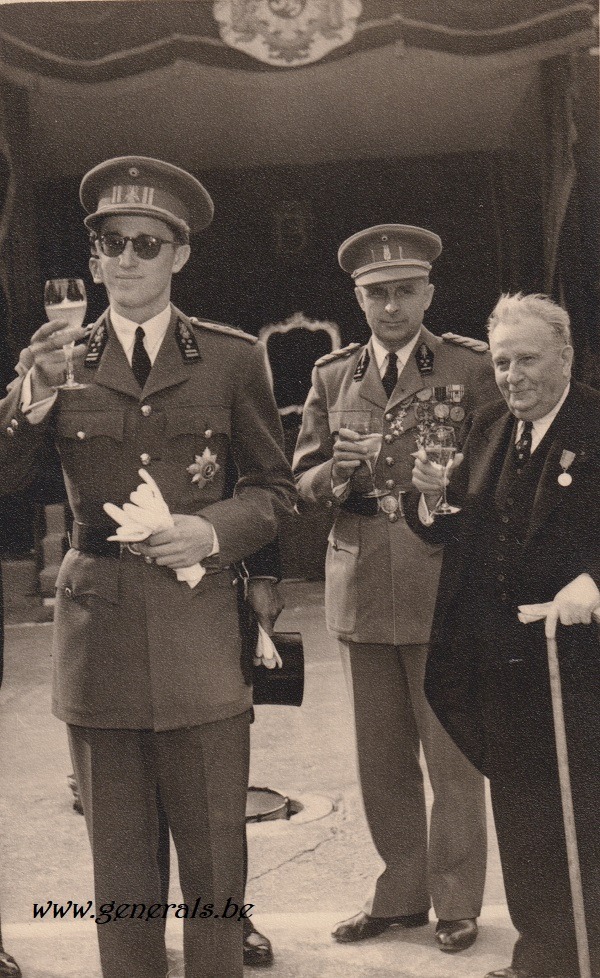
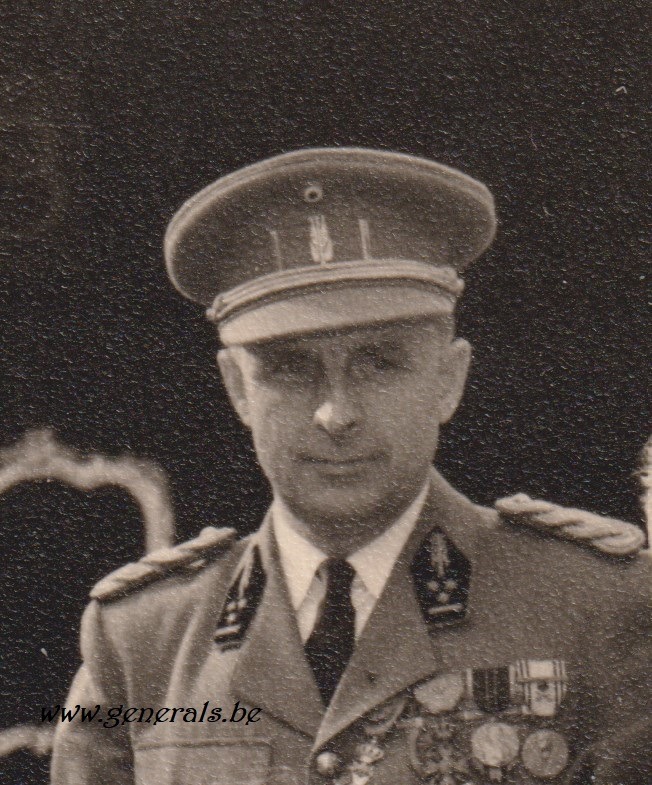
Grand Officer of the Order of Leopold (1960) 'In recognition of his outstanding service to the country and the armed forces, notably during his four years as Minister of National Defence' and the Order of the Crown (1956),
Commander of the Order of Leopold II (1946). Citation: ‘Who has distinguished himself particularly through his work, competence and dedication during the reorganisation of the army’,
1940 War Cross with bronze lion. Citation : 'As commander of the unit, on 11 May 1940, at Ulbeck, he demonstrated composure during an air raid, using his energy to prevent panic from breaking out. During the Battle of the Lys, he inspired his men by setting an example of courageous action, personally taking command of a team laying telephone lines. Under his leadership, his unit distinguished itself particularly through its conduct and performance in establishing and operating communications for a large unit on the Albert Canal, at the Ghent bridgehead and on the Lys diversion canal.’
1940–1945 Resistance Medal, 1940–1945, Commemorative Medal 1940–1945 with bar ‘Bataille de Belgique 1940’, crossed sabres and bronze lion, Military Cross 1st Class, Civilian Medal for Courage and Self-Sacrifice (1947), Civilian Medal 1st Class (1926).
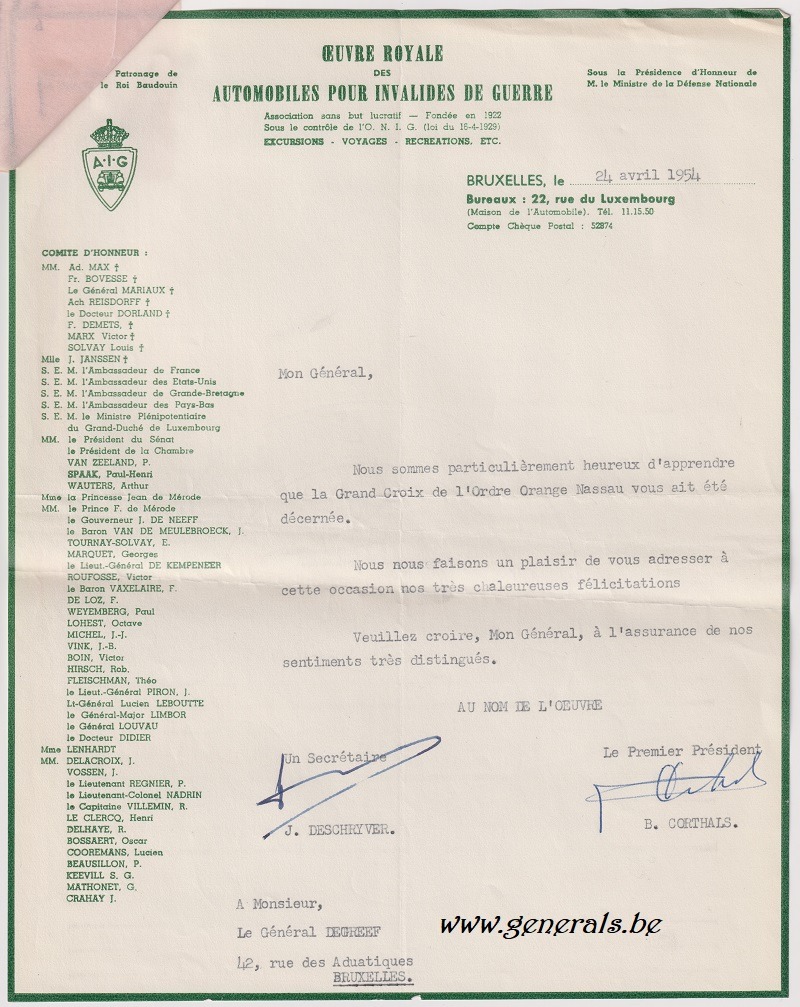
Grand Cross of the Order of Adolf of Nassau, Luxembourg (1960), Order of Orange-Nassau, Netherlands (1954), Order of Christ, Portugal (1954), Order of Menelik, Ethiopia (1952), Order of the Oak Crown, Luxembourg (1952), Order of General Ignacio Comonfort, Mexico (1950).
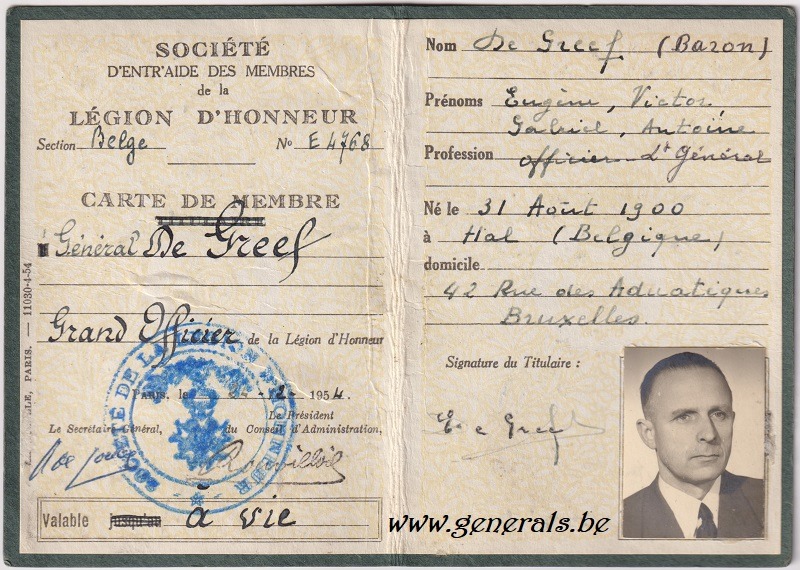
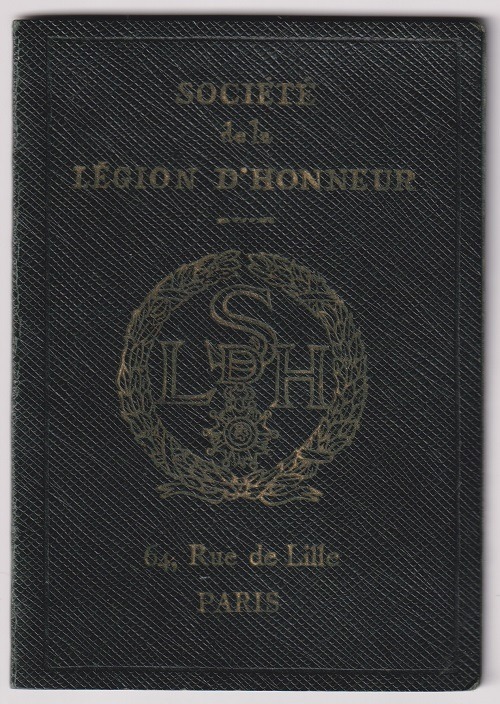
Grand Officer of the Legion of Honour, France (1954).
Order of Military Merit Taiguk, Korea (1954), Member of the Order of the British Empire (1946), Bronze Star, United States (1946).