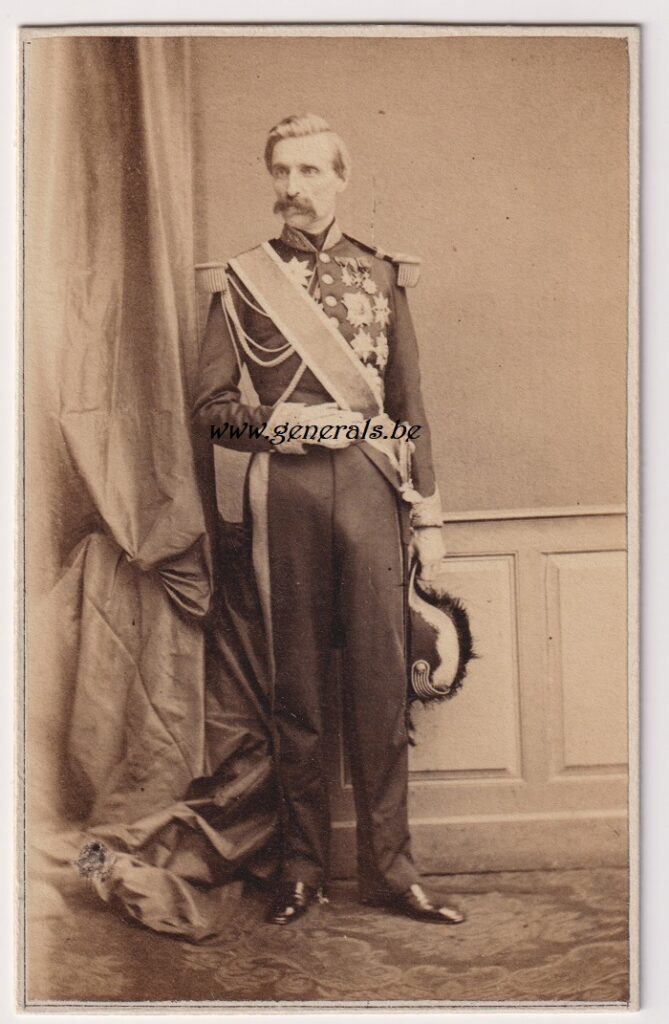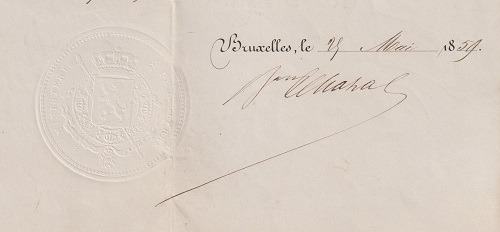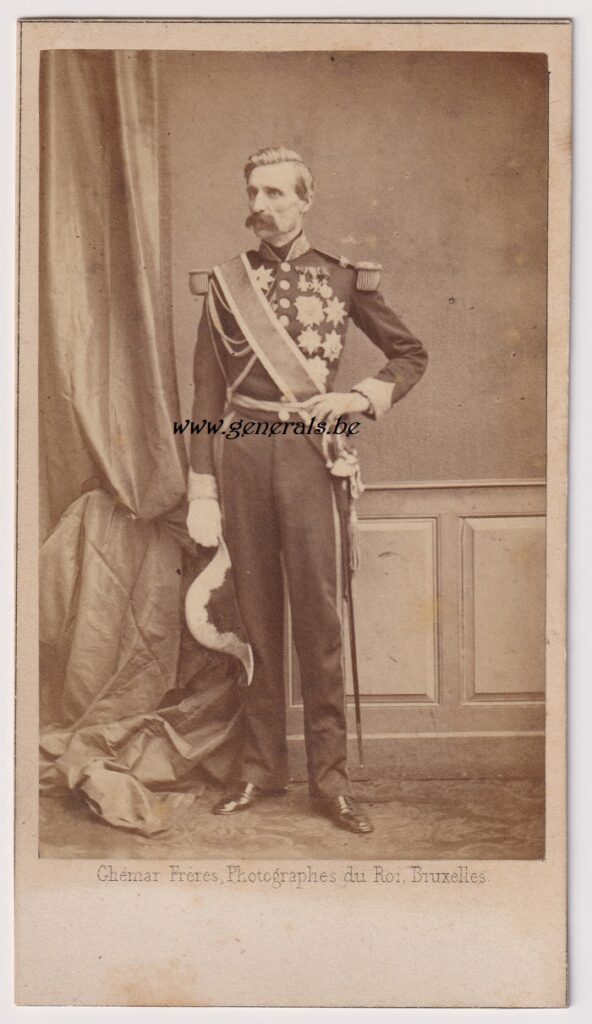
Baron Pierre Emmanuel Félix Chazal (1808–1892) was one of the most important military and political figures in the early history of Belgium. Although he was born in France, he played a crucial role in the Belgian Revolution and the development of the young kingdom.
Chazal was born in Tarbes, France, in 1808. His father was a French politician who had fled to Brussels after the fall of Napoleon.
Before becoming a military icon, the young Pierre Emmanuel was active in the business world, trading in fashion items and fabrics in Brussels.
Unlike many other generals, he had no military training before 1830. His tactical insight proved to be a natural talent that only emerged during the street fighting of the revolution.
The fact that Chazal, a Frenchman, fought alongside the Belgians was certainly no exception in 1830. The Belgian Revolution attracted hundreds of foreign volunteers, mainly from France, who helped the young state in its struggle against the Dutch.
Chazal distinguished himself in September 1830 as second commander of the Liège militia. Under his leadership, these volunteers made an important contribution to the fighting that forced the Dutch to withdraw from Brussels.
When unrest broke out in Brussels, Chazal demonstrated his military talent by organising provisional civil guards. In doing so, he laid an important foundation for what would later become the Belgian army.
Due to his success with the volunteers, the Provisional Government appointed him Intendant-General in November 1830, responsible for the logistics and supply of the new armed forces.
For his participation in the battles of 1830, he was awarded the Iron Cross 1830. The citation reads as follows:

It was not until 1844 that he obtained full Belgian nationality through the grand naturalisation procedure. This was necessary in order to continue his political and military career at the highest level (as a minister, for example).
As Minister of War, Pierre Emmanuel Félix Chazal was one of the most influential figures in the development of Belgian defence during the 19th century. He held this post in two different periods: 1847–1850 and 1859–1866.
Chazal had this military camp in Leopoldsburg converted into the largest and most modern training ground in Europe. A monument in his honour stands on the military domain.
Under his leadership, the decision was taken to make Antwerp the “National Redoubt”, an enormous belt of fortifications that would serve as a last resort for the army in the event of an invasion. He also worked hard to professionalise the officer corps and armament, although he often clashed with parliament over the high costs of his military projects.
His ministry ended in a historic scandal that was typical of his fiery character. After a heated debate in the Chamber about Belgian support for the Mexican Civil War, Antwerp MP Jan De Laet insulted Chazal's honour. Chazal challenged him to a pistol duel. Although no one was injured, duelling was strictly forbidden. The Court of Cassation sentenced him to imprisonment and a fine. Although King Leopold II pardoned him, the incident ultimately led to his departure as minister in 1866.
Baron Chazal's involvement with Mexico was both political and deeply personal. As Minister of War, he played an ambiguous role in supporting the Belgian Legion (1864–1867), a volunteer corps tasked with protecting the throne of Belgian Princess Charlotte and her husband Maximilian. This corps of volunteers fought in Mexico to protect Emperor Maximilian's throne. Although this military venture ended in disaster, the king and Chazal remained in agreement about the necessity of such international missions. His son, Captain Jules Ernest Chazal, was killed in action during the Battle of Tacámbaro in 1865.
After his resignation as Minister of War, he remained active in the military. During the Franco-Prussian War of 1870-1871, he commanded the Observation Army, which was tasked with guarding Belgian neutrality at the borders.
Upon his retirement on 24 May 1875, he became Adjutant-General and Chief of the Military Household of King Leopold II until his death in 1892.
In 1846, King Leopold I elevated him to the nobility with the title of baron. In 1857, this title became transferable to all his male descendants.
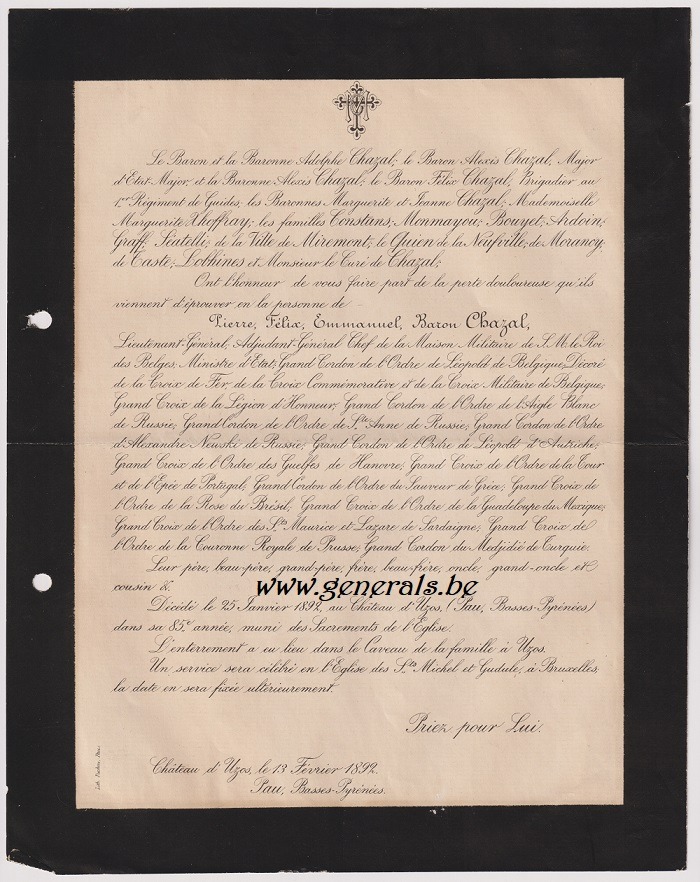
Chazal died in Uzos (France) on 25 January 1892. His wife died on the same day.