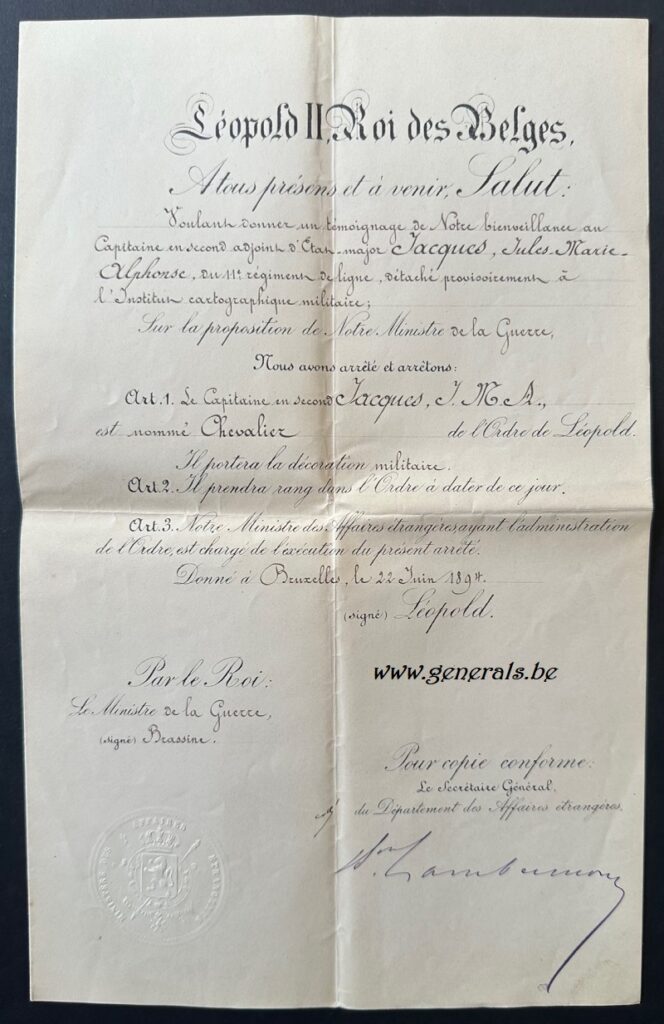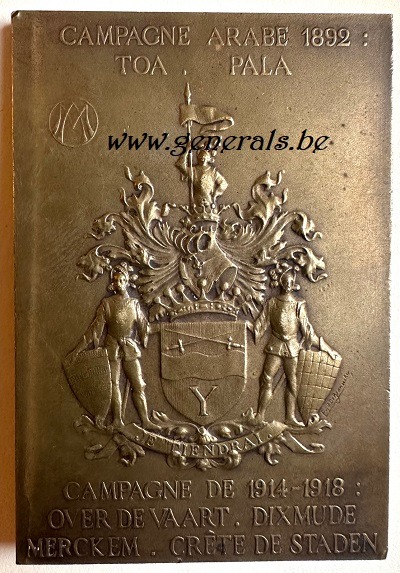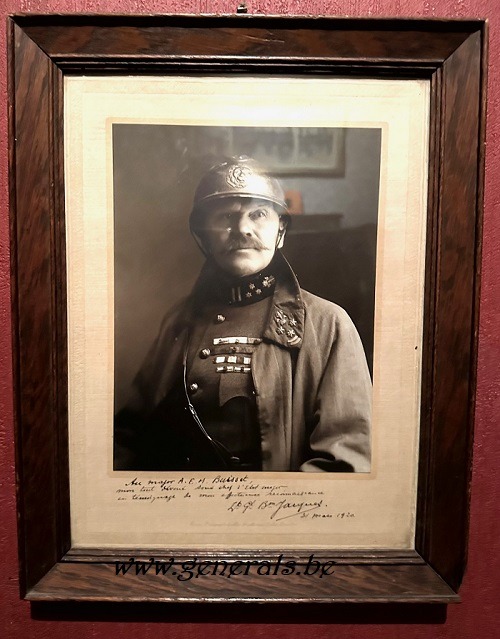
Between 1886 and 1905, he served four times in King Leopold II's Independent Congo State. He played an active role in the Arab Campaigns and the economic exploitation of the rubber areas.
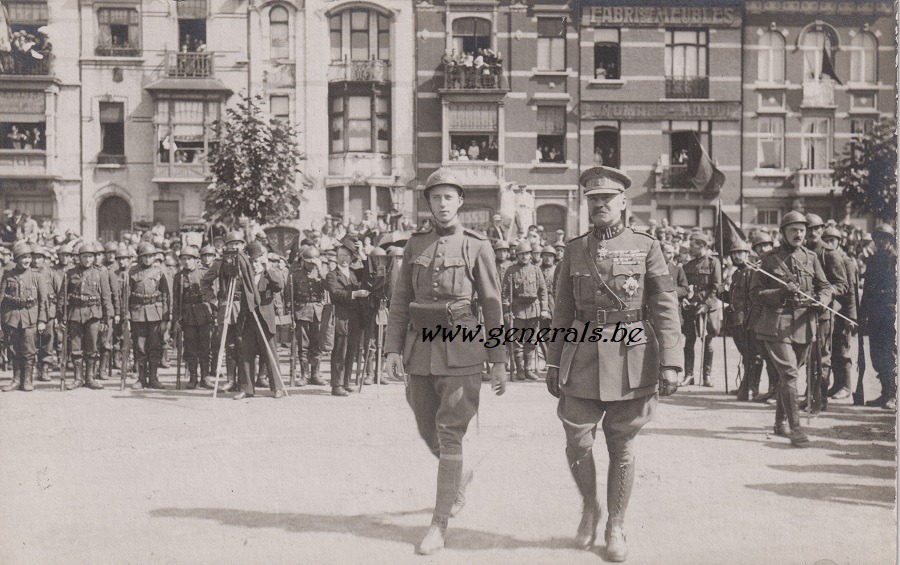
As commander of the 12th Line Regiment, he led the successful defence of the Diksmuide bridgehead during the Battle of the Yser in 1914. His mission was simple but deadly: to hold the town of Diksmuide at all costs in order to halt the German advance towards the French ports. If the city had fallen, the enemy could have attacked the Belgian lines from behind. For these achievements, King Albert I ennobled him as a baron in 1919 and allowed him to add “de Dixmude” to his name.
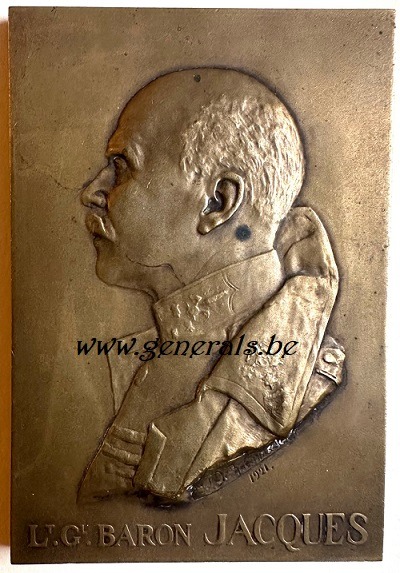
From April 1916 onwards, Lieutenant-General Jacques commanded the 3rd Army Division, which was given the honourable nickname “The Iron Division” (Division de Fer) because of its tenacity at the front. The 3rd Army Division succeeded in halting a major German spring offensive. Jacques' soldiers were the only ones who did not allow their lines to be broken, which definitively established the division's reputation.
The division played a key role in the liberation of Belgium. It captured strategic points such as the forests of Houthulst and towns such as Staden and Westrozebeke. Towards the end of the war, the division reached the banks of the Leie and took part in the final battles before the armistice.
He remained commander of the 3rd Army Division until his retirement.
In 1919, he was asked to accompany the royal couple on their state visit to the United States, which underlined his status as a national hero.