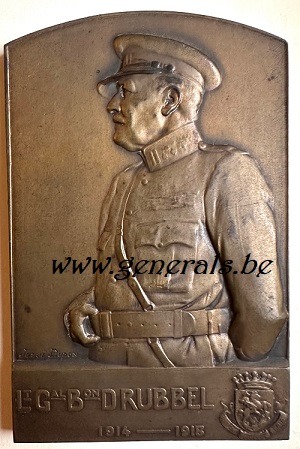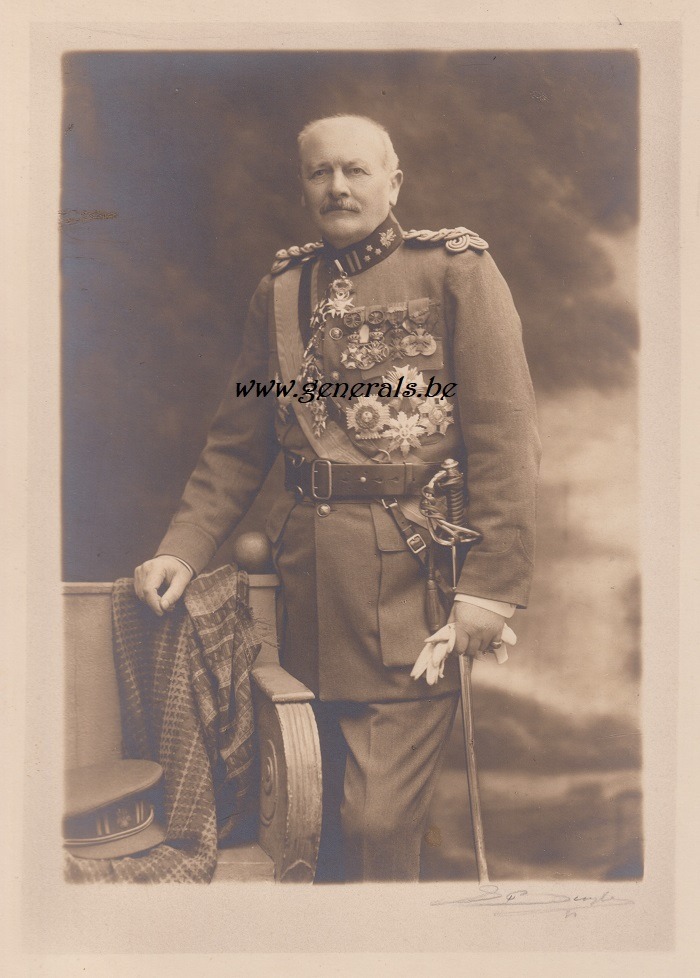
Honoré, baron in 1921, Drubbel commanded the 7th Mixed Brigade at the outbreak of the First World War.
Under General Drubbel's command (from early 1915), the 2nd Army Division grew into one of the most active units on the front. Under Drubbel, the division stood guard for years in the muddy trenches of the Yser Plain in the Diksmuide sector. This was one of the toughest sectors due to its proximity to the German lines and constant artillery fire. During the Final Offensive, the 2nd Division was part of Army Group Flanders. They broke through the German lines at the Vrijbos van Houthulst and advanced towards the Leie to finally liberate Antwerp. It was a symbolic highlight for the men of the 2nd Division when, in November 1918, they were one of the first units to re-enter their “home town” of Antwerp. Home town, because the headquarters of the 2nd Division was located in Antwerp in 1914 and many recruits came from the region.
The Front Movement had a significant influence within the 2nd Division. Because General Drubbel prohibited any form of political activism, soldiers who distributed Flemish-language leaflets or protested against French-speaking commanders were severely punished. This created a lasting rift between the senior officers and the Flemish troops. General Drubbel's harsh crackdown on the Front Movement was uncompromising and authoritarian. He did not see the Flemish demands at the front as a social or cultural struggle, but as a direct threat to military discipline and national unity in wartime.
Until his retirement in 1920, he remained commander of the 2nd Army Division.